Sunday Moses Adebayo Aloko

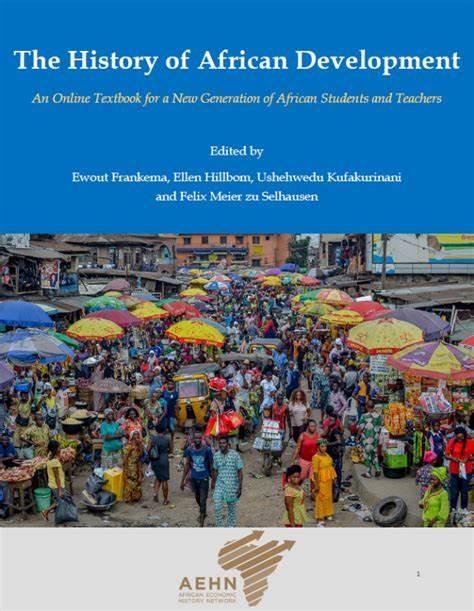
Book Title: The History of African Development: An Outline Textbook for a New Generation of African Students and Teachers
Editors: Ewout Frankema, Ellen Hillbom, Ushehwedu Kufakurinani and Felix Meier zu Selhausen
Publisher: African Economic History Network, 2023
Pages: 296 pages
ISBN: 978-94-6447-652-1

The book comprised of 17 chapters edited by Ewout Frankema, Ellen Hillborn, Ushehwedu Kufakurinani and Felix Meier zu Selhausen and published by African Economic History Network (AEHN) in 2023.

A History of African Development, is beyond reasonable doubt an all-encompassing and insightful book that delves into and analyses the complex and multifaceted history of growth and development as well as challenges and prospects in the continent of Africa. In order to achieve the purpose of the book and that of the economic history network, the book brings together a collection of scholarly essays written by leading academics in the field of economic history, within and outside of Africa. Thus, the book offers a diverse range of perspectives and analyses, which is both captivating and inspiring.
The book is divided into several sections. Each of these sections focus on a different aspect of development in Africa.

The 17 sections cover topical issues such as the pre-colonial economies of African states; their features, achievements and challenges, the imposition of colonial rule and its impact on the continent’s development, post-colonial state-building process, economic policies and strategies, social development as well as the ensuing contemporary challenges faced in Africa in the 21st century. In addition, it also looked at the role of modern financial institutions and investments in the development of Africa since the turn of the 20th century. Each section is carefully curated to critically provide a comprehensive overview of the subject matter under discourse.

One of the notable features of the book is its emphasis on historical context, which provides a great insight into the history of development in Africa. It is clear that the authors comprehend the unequivocal role of understanding Africa's past in order to make sense of its present challenges and opportunities for the future. Its approach, which critically examined the historical roots of African development, offers invaluable insights into the long-term trends and patterns that have shaped the continent's economic and social landscape up to the present.

Furthermore, a History of African Development adopts a critical perspective towards mainstream development theories and approaches in the study of the economic history of Africa. The authors challenged conventional wisdom and interpretations and offered alternative interpretations and explanations for Africa's development experiences in the light of internal and external dynamics. This critical analytical lens encourages readers to not just question the dominant narratives in the study of economic development in Africa but also to think critically about the complexities and prospects of realizing economic development in Africa, through continental integration, unity and cooperation in well-defined areas.

In terms of writing style, the book epitomizes a striking balance between academic rigor, simplicity and accessibility to a large audience of students and teachers interested in Africa’s economic history. While it is undoubtedly an academic publication essentially targeted at young and emerging scholars, the language used is clear and concise, making it accessible to both scholars and non-specialist readers interested in economic development in Africa. The book’s inclusion of maps, tables, and figures has also given readers a graphical and empirical picture of the areas of study in time perspectives. It also enhances the readability and comprehension of the text by all who are interested in the issues raised.

One of the major strengths of the book is the interdisciplinary approach it adopts in the study of African economic development over a given period of time. The editors carefully brought together specialists from various disciplines such as history, economics, political science, and sociology, to provide a holistic understanding of African development experience, past and present. The interdisciplinary approach makes for a nuanced exploration of the historical, economic, social, and political factors that have shaped Africa's development trajectory. Consequently, the prospects for the future can be ascertained for meaningful and sustainable development in the long run.

Overall, A History of African Development by the African Economic History Network is a valuable resource for anyone interested in understanding Africa's development trajectory comprehensively. Its impressive and commendable interdisciplinary approach, historical context, critical perspective, and accessible writing style makes it an essential read for scholars, policymakers, students, and anyone interested in the past, present, and future of economic development in Africa.
 NIGERIA REVIEW OF BOOKS